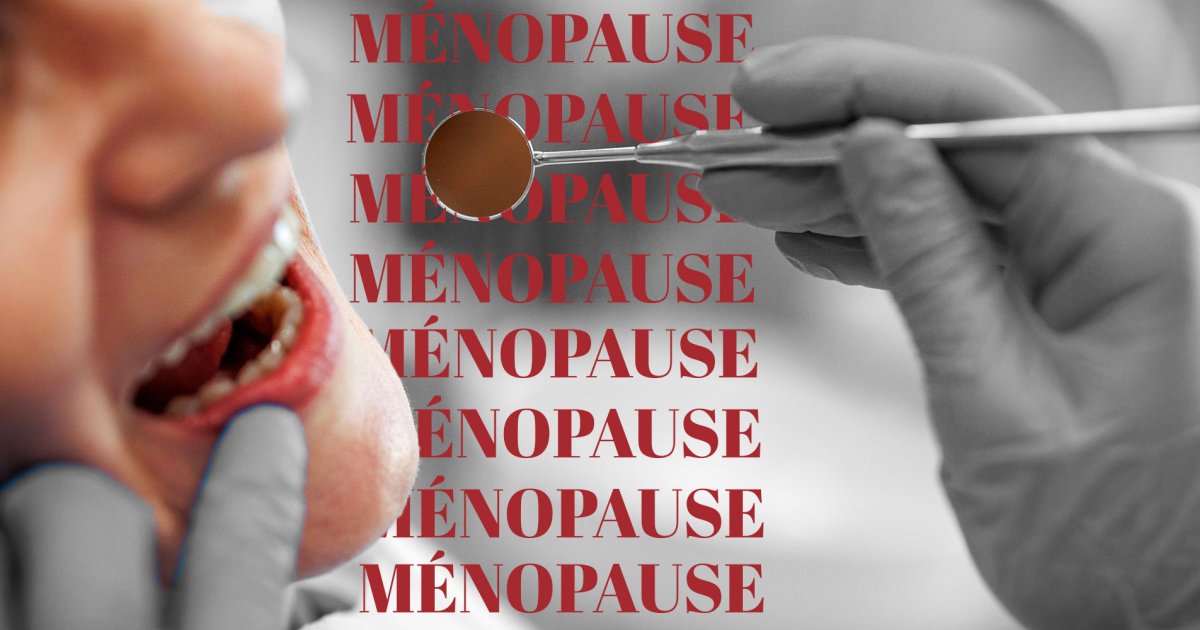
Menopause & perimenopause: the impact on oral health
02-02-2026Perimenopause and menopause are two important stages in a woman's hormonal life, and their effects are not limited to the body: the mouth can also be affected, but the link is often overlooked.
Perimenopause vs. menopause: Perimenopause is the transition period when hormones begin to fluctuate. It often causes irregular cycles, hot flashes, mood swings, and sometimes certain oral changes. Menopause, on the other hand, corresponds to the complete cessation of menstruation for 12 months. Estrogen levels remain low, which affects saliva production, gum health, and the bone that supports the teeth. This hormonal decline can therefore promote various oral health issues.
Possible effects on the mouth: Dry mouth is one of the most common symptoms: with less saliva, the mouth becomes dry, which increases the risk of cavities, bad breath, and discomfort. The gums may also become more sensitive and prone to inflammation (bleeding, redness, recession), increasing the risk of periodontal disease. Some women experience a metallic taste, tingling, or a burning sensation. A decrease in bone density is also possible and can weaken tooth support or complicate certain treatments such as implants.
How can you protect your oral health? A few simple measures can help: regular dental visits, rigorous oral hygiene (brushing twice a day with fluoride toothpaste and flossing daily), staying well hydrated, and using appropriate products for dry mouth (gels, sprays, saliva substitutes).
Talk to your dentist to establish a suitable prevention plan and adjust your care according to your needs throughout perimenopause, menopause, and beyond.